

Rural Access Matters: Bringing Food and Prescriptions Closer to Tribal Communities

In rural Tribal communities, distance can turn two everyday needs into major challenges: nutritious food and prescriptions. On Rural Transit Day, Aambé is highlighting a practical opportunity. With the right community partners and locally designed systems, both can be brought closer to families, elders, and community members.
This is not only a transportation issue. It is a question of health access, continuity, dignity, and whether people can get what they need without making another long trip.
Rural Access Is Health Access
Rural Transit Day recognizes the passengers, employees, and agencies that help rural and Tribal communities stay connected. The National Rural Transit Assistance Program emphasizes understanding the unique needs of rural and Tribal passengers and coordinating with community organizations so people can reach more destinations.
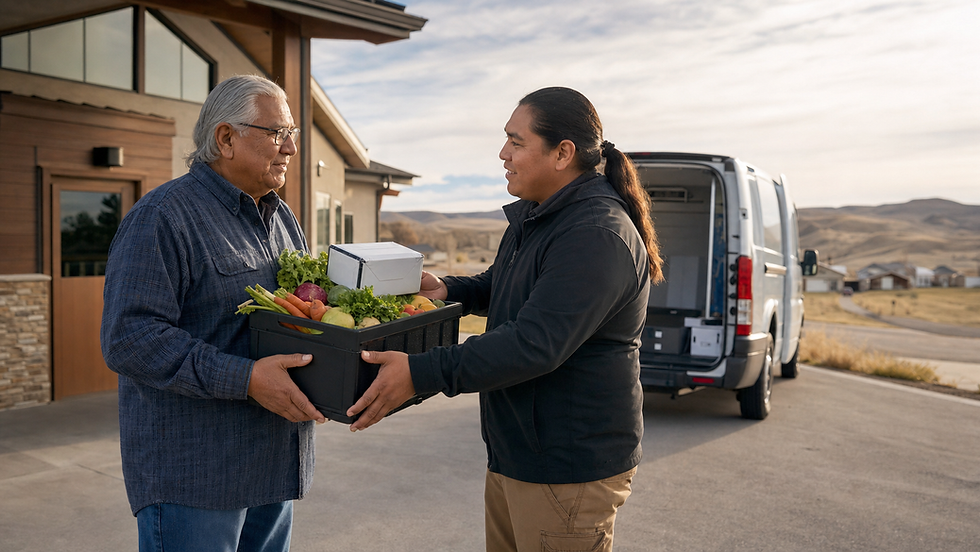
That same service-minded thinking can extend to essential deliveries. When prescriptions and nutritious food travel to the community, transportation becomes more than movement. It becomes part of the health system.
For an elder managing several medications, a family without dependable transportation, or a community located far from a full-service pharmacy or grocery store, one reliable delivery can remove a meaningful barrier.
Two Needs, One Community-Centered Approach
A coordinated access model could bring several pieces together:
Prescription coordination and distribution through qualified pharmacy partners
Nutritious food supplied through local food programs, Aambé Health Living Food systems, or other community partners
Delivery schedules designed around the real geography and needs of the community
Clear communication among Tribal leaders, clinics, pharmacies, food programs, and transportation providers
Safe handling, patient privacy, and dependable storage throughout the trip
The point is not to force two services into one rigid program. The point is to ask a better question: what can be coordinated so community members spend less time overcoming distance and more time caring for themselves and their families?
How Aambé Can Help Connect the Pieces
Aambé Health is focused on improving access to comprehensive healthcare for Native American Tribes and surrounding communities, including the distribution of prescriptions. Aambé Health Pharmacy brings a personal, community-centered approach to pharmacy care. Aambé Health Living Food helps Tribal communities explore year-round fresh food production closer to home.
Together, those capabilities give Tribal leaders a starting point for exploring a coordinated model. Aambé can help bring the right conversations together around healthcare, pharmacy access, nutritious food, logistics, technology, and community partnerships.
The final model must be shaped locally. Medication delivery must follow pharmacy laws, patient privacy requirements, storage standards, and clinical safeguards. Food handling and delivery must also protect quality and safety. Aambé's role is to help communities think through those connections carefully and build around Tribal priorities.
Built Around Tribal Priorities
Every Tribal Nation is different. Geography, population, existing transportation, clinic capacity, pharmacy relationships, food programs, and workforce resources all shape what will work.
A strong planning process should begin with practical questions:
Which community members face the greatest transportation barriers?
Which prescriptions and foods can be delivered safely?
Could existing Tribal transportation routes support coordinated stops?
Which clinic, pharmacy, food, or technology partners should be involved?
How can local workers and community organizations participate?
What privacy, storage, scheduling, and communication safeguards are required?
Asking these questions early helps turn a promising idea into a dependable service.
What Success Could Look Like
Success is not measured only by miles traveled. It can mean fewer missed prescription pickups, more consistent access to fresh food, less pressure on families arranging transportation, and stronger coordination among the organizations already serving the community.
It can also create opportunities for local drivers, food producers, pharmacy teams, community health representatives, and technology partners to work together.
Most importantly, it keeps the focus where it belongs: helping people receive essential support with dignity and respect.
Quick Questions
Can Aambé help deliver prescriptions and nutritious food?
Aambé can help Tribal Nations explore and coordinate access models using its healthcare, pharmacy, and Living Food capabilities alongside qualified local partners. The exact services, routes, safeguards, and responsibilities must be designed for each community.
Why connect this idea to Rural Transit Day?
Rural Transit Day recognizes the people and systems that connect rural and Tribal passengers to essential destinations. Coordinated delivery applies the same access-first thinking by bringing some essential services closer to the people who need them.
Is one delivery model right for every Tribal Nation?
No. Each Tribe should define its own priorities, partners, routes, safety requirements, and measures of success.
Bringing Care Closer
Distance should not decide whether a family can reach nutritious food or whether an elder can receive a needed prescription.
Aambé believes the strongest solutions begin by listening to the community, connecting the right partners, and building systems that work in real life. Rural Transit Day is a reminder that dependable access can change what is possible.
If your Tribal Nation is exploring better ways to connect healthcare, pharmacy services, nutritious food, and rural delivery, Aambé is ready to start the conversation.


Comments